
Overview
Contemporary Artworks is a Cincinnati, Ohio, ecommerce gallery serving first time art buyers, private collectors, and corporate curators. Its online collection includes original paintings, fine art prints, and decorative artwork.
The company began advertising on Facebook in August with a limited initial budget. A traffic campaign was used to introduce the gallery to new audiences, drive affordable website visits, and collect performance data before investing in a more conversion focused campaign.
Understanding Demographics
The client had a general understanding of its customer demographics but needed a more defined audience strategy. Based on the client’s experience, our market research, and Facebook’s available targeting capabilities, we identified the platform as a strong fit for reaching likely art buyers.
The campaign focused on an older audience with demonstrated interests in artwork, interior design, and home décor. We also considered audience characteristics consistent with the price range of the featured pieces, allowing the limited advertising budget to focus on people more likely to appreciate and purchase the work.
Initial Assessments
The company began with fewer than 100 Facebook followers, so the initial campaign focused on introducing the gallery to new audiences and driving visitors to its online collection. We created carousel ads that allowed people to browse several pieces within a single advertisement and visit the corresponding product pages through a clear “Shop Now” call to action.
The client supplied photographs of the available artwork, which we transformed into custom room mockups showing each piece in a realistic setting. This helped potential buyers visualize the artwork in their own homes while giving the campaign more polished and engaging creative.
For e-commerce businesses, carousel ads provide an effective way to feature multiple products and direct interested customers to specific website pages. Product catalogs can also be connected with Meta to organize inventory, support product based advertising, and create a smoother path from discovery to purchase.
Facebook Ad Examples


Audience Information
During the first month, campaign data showed that 88% of the responding audience was female and 11% was male, with the remaining difference due to rounding. Women ages 45 and older generated the strongest response, and those ages 65 and older produced the highest volume of website traffic, as shown below.
Results
The campaign generated 832 website clicks in 38 days, representing a 766.7% increase compared with the previous 38 day period. The average cost per result was $0.52, allowing the gallery to introduce its products to substantially more potential buyers within a limited budget.
This traffic focused approach can be effective for e-commerce businesses with a simple, intuitive purchasing process. However, clicks are only the first step, so long term performance should also be evaluated through completed purchases, conversion rates, and revenue.


Facebook placements produced the strongest results, reaching 27,855 people and generating 773 link clicks. This data confirmed that Facebook was the most effective platform for reaching the gallery’s audience during the campaign.
Meta Ads Manager allows campaigns to run across Facebook and Instagram. Placements can be limited to a specific platform when appropriate, or Meta’s automated placement system can distribute the budget based on where it predicts the strongest performance.

Conclusion
The campaign remains active and has created enough website traffic to support the next stage of the strategy. With a larger audience pool, we can move further down the sales funnel through retargeting, conversion focused campaigns, and messaging designed for people who have already shown interest in the artwork.
Before the campaign, the website averaged 65 users per month. That average increased to 471 monthly users, representing growth of more than 600%. Visitors also spent an average of two minutes and 32 seconds on the site, suggesting they were taking time to explore the gallery and view its products.
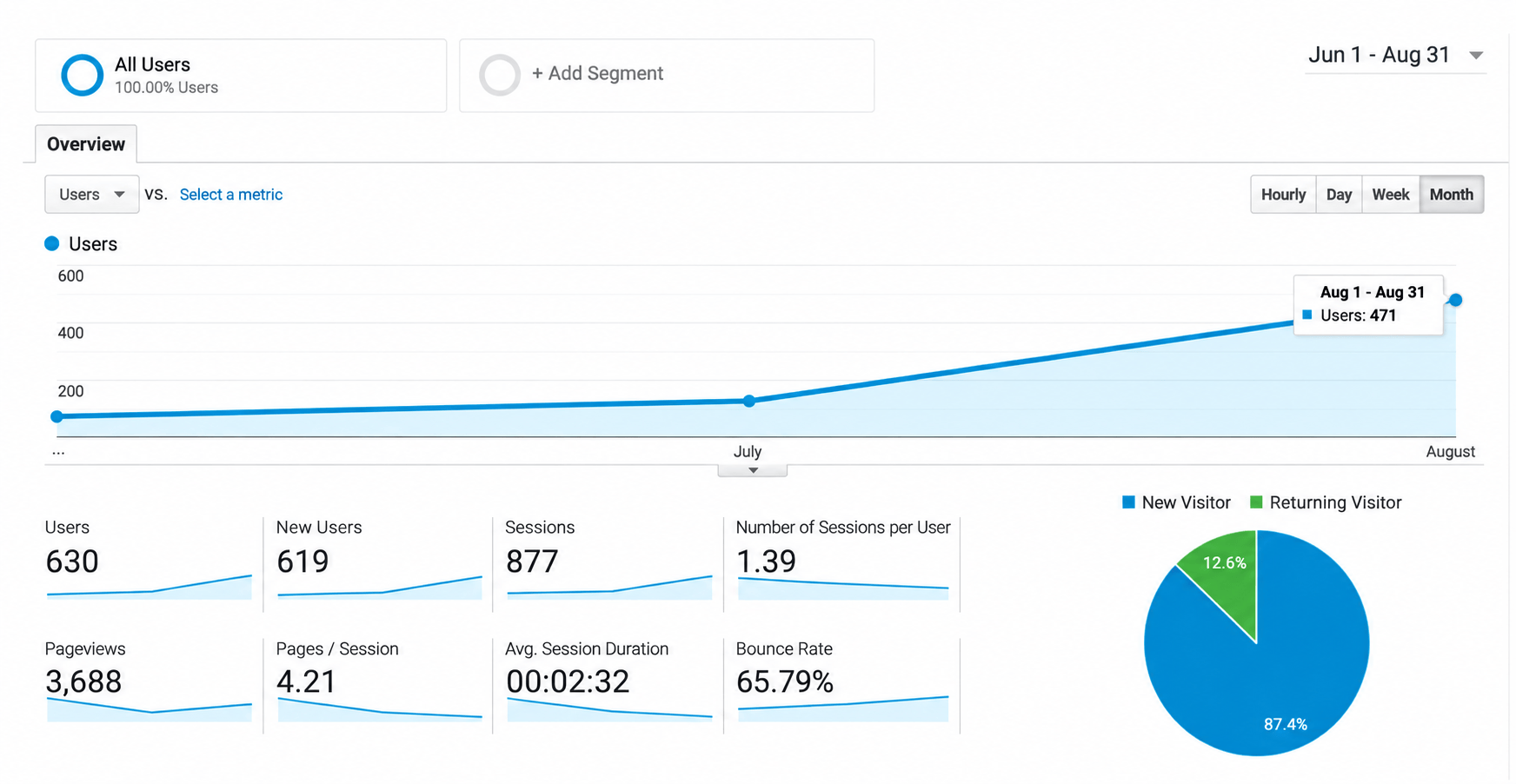
Overall website traffic increased by 66%, with social media accounting for 79% of all site traffic during the campaign period.


As part of our paid social services, we configure the Meta Pixel to measure important actions taken after someone interacts with an ad. This can include website visits, product views, items added to a cart, completed purchases, form submissions, and phone calls. Custom conversion events can also be created around the actions that matter most to each business and customer journey.

The next stage was to retarget people who had visited the website or interacted with the brand. Using data collected through the Meta Pixel, we created a custom audience of previous visitors and a lookalike audience of people across the United States who shared similar characteristics.
This campaign demonstrates the value of matching the strategy to the client’s budget and current level of online visibility. The initial traffic campaign built awareness, increased website visits, and created a larger pool of audience data at an efficient cost. With that foundation established, the campaign could progress toward conversion focused advertising designed to generate purchases from returning and newly identified prospects.